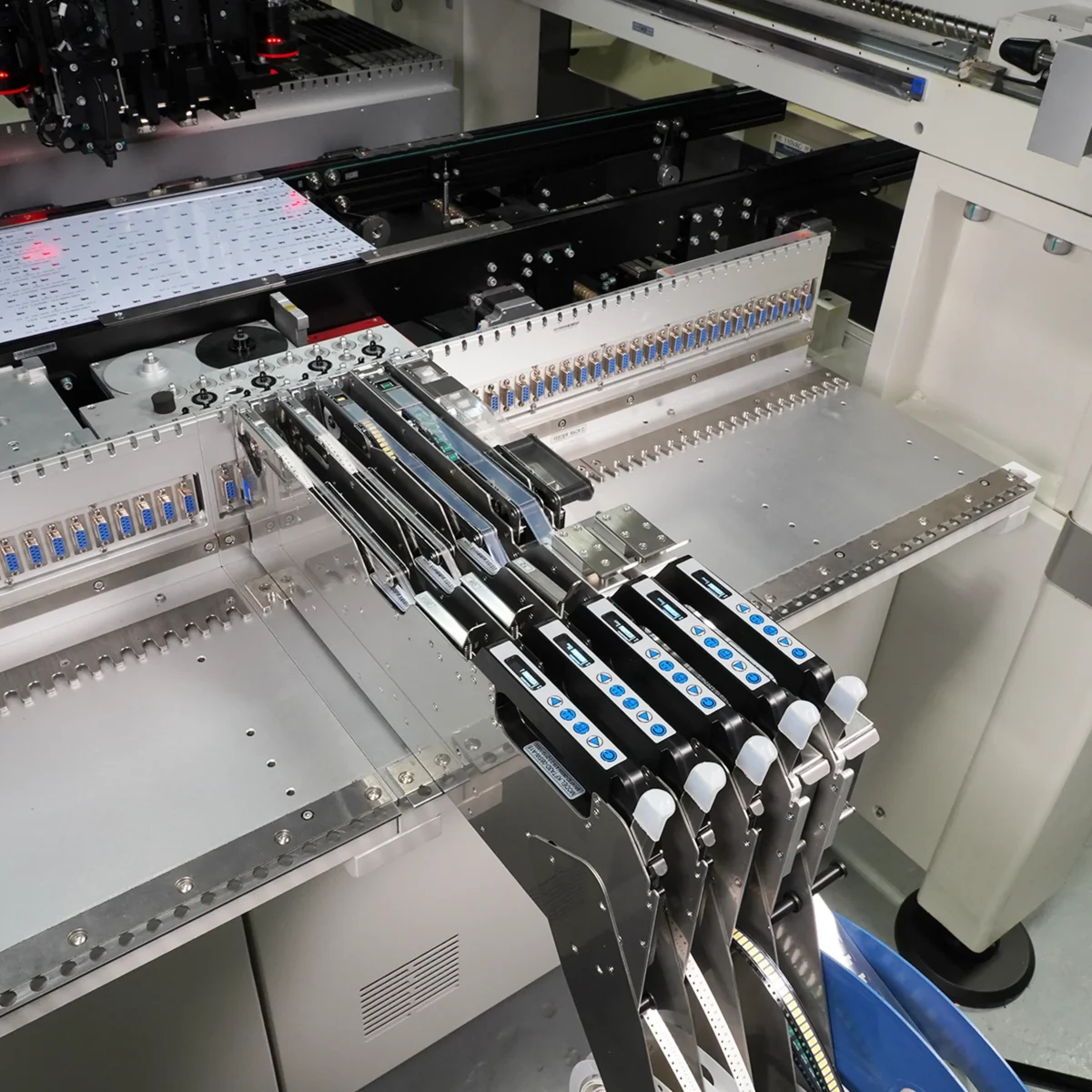
In modern SMT production environments, feeder errors are often treated as isolated mechanical or software issues. In reality, a large percentage of smt tape errors originate much earlier in the process, at the splice itself. The splice is the first point where tape geometry, adhesive performance, and operator technique intersect. If any of these factors […]
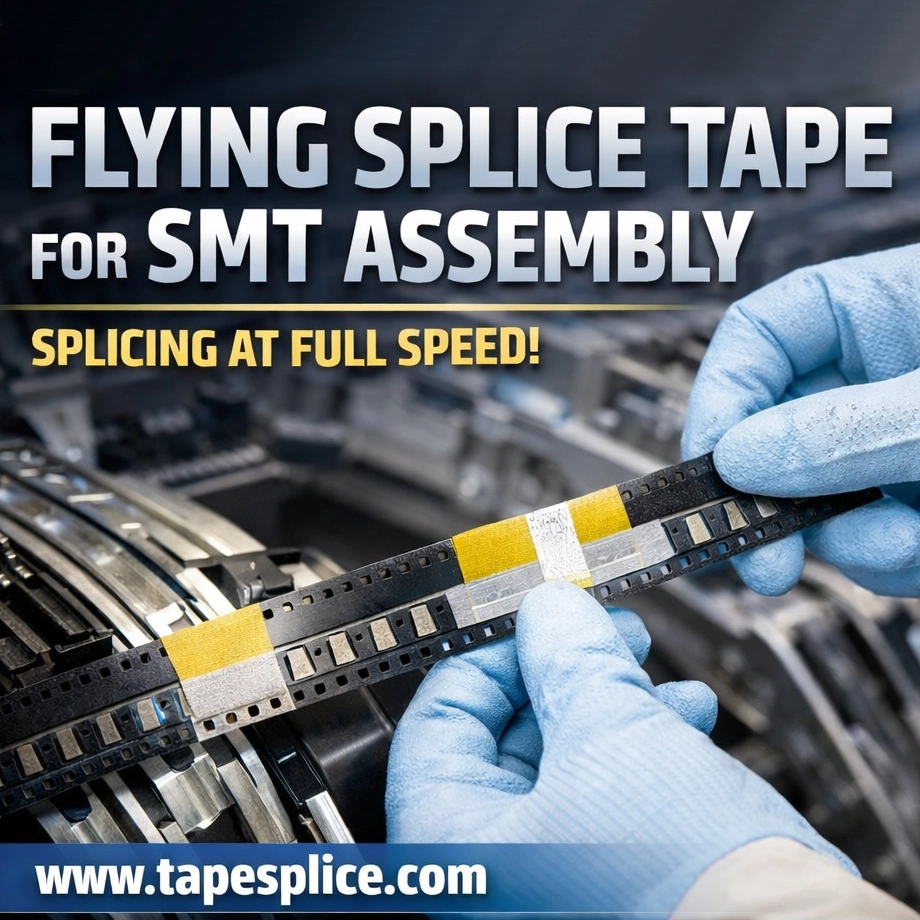
Flying Splice Tape in Modern SMT Assembly In modern SMT assembly, downtime is the enemy. Lines routinely run at 30,000–40,000+ components per hour, feeders are tightly synchronized, and any pause ripples downstream into lost throughput, scrap risk, and missed delivery windows. That’s where flying splice tape comes in. A flying splice is exactly what it […]
Most conversations about SMT start at the top of the machine. Vision systems. Placement speed. Throughput charts.40,000 CPH becomes the headline and everything below it disappears. But the foundation of SMT was never software. It was mechanics.And it came from Hollywood. Decades before surface-mount manufacturing scaled, the motion picture industry had already solved a brutal […]

One-Sentence Definition Standardized feed direction in SMT carrier tape is the uniform orientation of component pockets, cover tape, and sprocket holes that ensures consistent feeder indexing and repeatable component pickup across all pick-and-place equipment, as formalized by the EIA-481 standard. Historical Context In the early development of surface-mount assembly, SMT equipment manufacturers independently defined how […]

When engineers talk about SMT carrier tape in 2026, the conversation usually centers on speed, tolerance, and automation. Feeder accuracy. Peel forces. Indexing at 40,000 components per hour (CPH). What’s almost never mentioned is this: A key part of modern SMT packaging traces its mechanical DNA back to Hollywood. Long before EIA-481 existed, the electronics […]

In modern PCB manufacturing, SMT assembly is often described as a software-driven process: vision systems, placement algorithms, and closed-loop feedback.What’s rarely discussed is that SMT reliability still begins with something far more basic, mechanical directionality. Before the EIA-481 standard existed, surface-mount carrier tape had no universally agreed-upon feed direction. Each pick-and-place equipment manufacturer defined its […]

In the fast-paced world of 2025 PCB manufacturing, we often focus on AI vision systems, smarter algorithms, and faster placement heads. But the real foundation of a stable, high-speed SMT line isn’t software. It’s mechanical directionality. The Chaos Before the Standard Before EIA-481, SMT packaging was a mechanical wild west. There was no universal feed […]

In modern PCB manufacturing, SMT assembly is often described as a software-driven process: vision systems, placement algorithms, and closed-loop feedback.What’s rarely discussed is that SMT reliability still begins with something far more basic, mechanical directionality. Before the EIA-481 standard existed, surface-mount carrier tape had no universally agreed-upon feed direction. Each pick-and-place equipment manufacturer defined its […]

In the fast-paced world of 2025 PCB manufacturing, we often obsess over the latest AI-driven vision systems and lightning-fast placement heads. But the secret to a stable, high-speed line isn’t just in the software—it’s in the mechanical directionality of the carrier tape itself. The Chaos Before the Standard Before the industry adopted the EIA-481 standard, […]
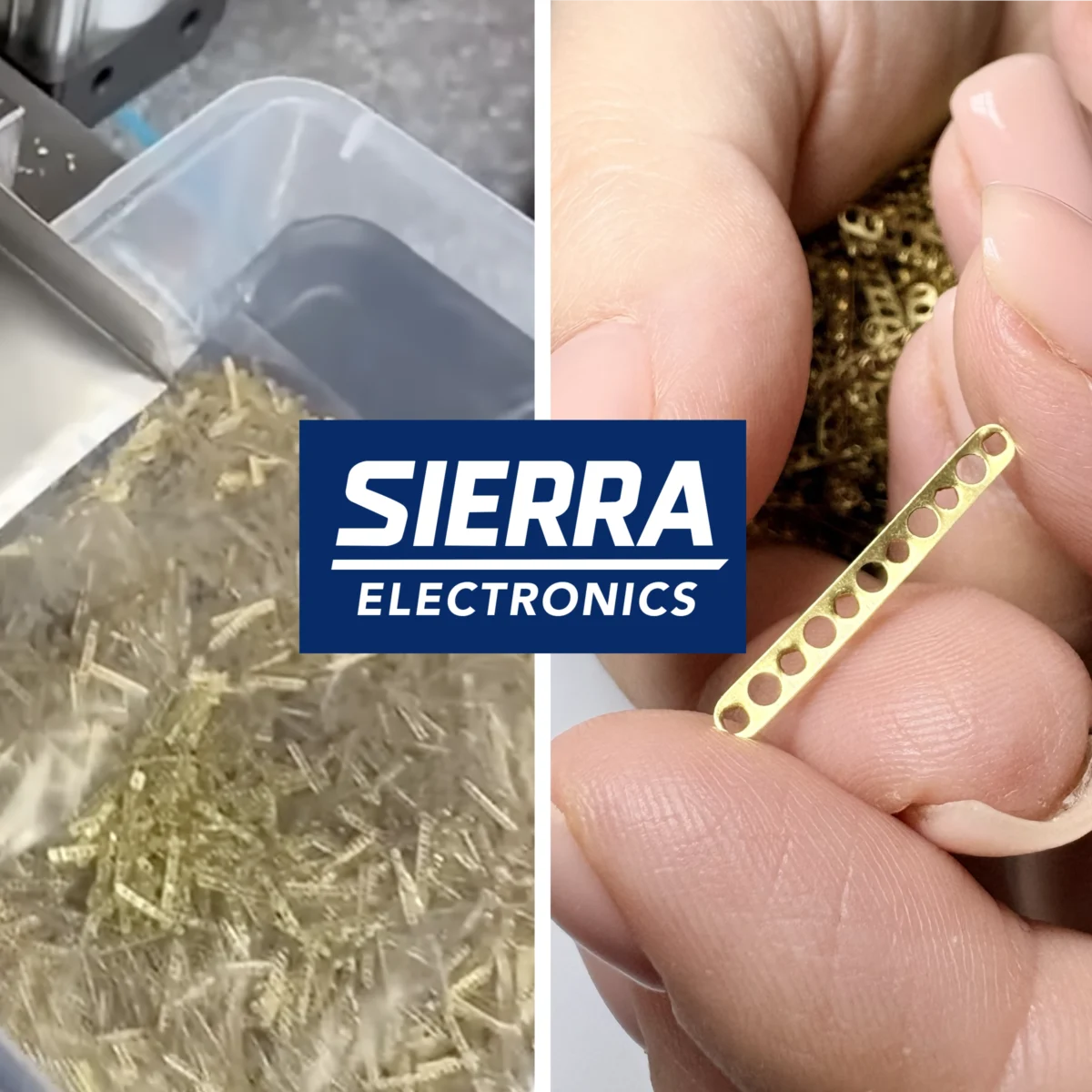
Single splice shims are small mechanical alignment components used during SMT carrier tape splicing. Although often treated as interchangeable consumables, splice shims directly interact with feeder sprockets, cutter blades, and carrier tape geometry. As a result, differences in material selection and manufacturing accuracy can affect feeder reliability, placement accuracy, and long-term equipment wear. This article […]