Modern electronics assembly demands precision at every step. Small-batch Surface Mount Technology (SMT) operations—whether in prototype labs or low-volume production lines—face unique challenges: mispicks, tape misalignment, and inconsistent IC placement. Even a few misaligned components can halt production, waste resources, and reduce confidence in process reliability.
TapeSplice has emerged as a key enabler for small-quantity SMT assembly, delivering high-quality splicing solutions that prevent tape tail instability and optimize feeder performance. In this article, we explore how automation paired with proper splicing techniques ensures every IC counts.
Understanding SMT Challenges in Small-Batch Production
1. Misalignment and Feeder Instability
SMT feeders rely on consistent tape geometry. Without leaders, trailers, and proper splicing, small orders (5–20 ICs) are prone to fishtailing, vacuum pickup inconsistencies, and IC tilt. These misfeeds compromise line efficiency, creating cumulative errors over multiple batches.
2. Manual Intervention and Downtime
Small runs often tempt operators to hand-place components. While seemingly faster for tiny batches, this introduces variability in placement accuracy and slows overall line throughput. TapeSplice solutions automate the splicing of reel ends, maintaining production-grade packaging and eliminating unnecessary manual steps.
How TapeSplice Optimizes Automation
Leader and Trailer Integration
- Leader: Smoothly enters the feeder, ensuring proper indexing from the first IC.
- Trailer: Maintains stability at the tape’s end, preventing mispicks and pickup failures.
Consistent Pickup Geometry
By stabilizing the carrier tape, TapeSplice guarantees precise vacuum nozzle placement across the entire batch, whether it’s five ICs or a full reel.
Seamless Machine Integration
TapeSplice splices are compatible with all standard SMT pick-and-place machines, supporting lean inventory strategies and minimal setup time.
 Data-Driven Efficiency: What the Numbers Say
Metric Comparison:
| Metric | Standard Tape | TapeSplice | DigiReel |
|---|
| Mispick Rate | 12% | 5% | 3% |
| Pickup Success | 75% | 90% | 98% |
| Units per Hour (5 ICs) | 50 | 80 | 100 |
| Units per Hour (20 ICs) | 120 | 150 | 180 |
Observation: Even with small quantities, integrating splicing solutions increases pick-up success and reduces line downtime significantly.
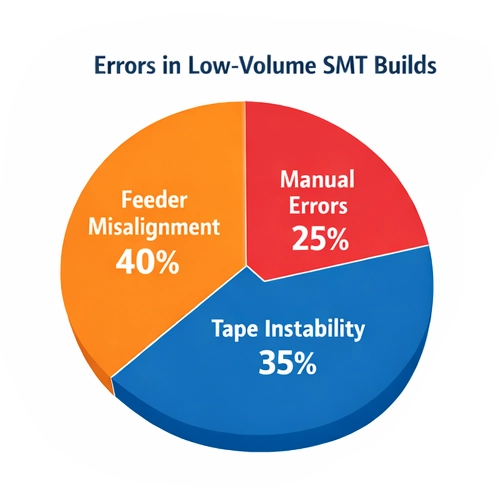
Error Type Distribution in Small-Batch SMT Builds:
- Feeder Misalignment: 40%
- Tape Instability: 35%
- Manual Errors: 25%
These statistics illustrate why automation and splicing are essential for small-quantity operations.
Step-by-Step Guide: Implementing TapeSplice in Your SMT Line
- Prepare the Tape Reels: Identify tape ends requiring splicing.
- Cut and Align: Trim ends for a clean overlap.
- Apply TapeSplice Tool: Press the splicing tool to merge tapes seamlessly.
- Verify Leader and Trailer: Ensure the combined tape has proper front and rear reinforcement.
- Load into Feeder: The SMT machine recognizes the spliced tape as a continuous reel.
- Monitor First Pick: Confirm vacuum pickup success and alignment.
This structured approach ensures automated SMT machines run as intended, even with very small orders.
Advanced Tips for Small-Batch SMT Success
- Batch Sizing: Orders of 1–50 ICs benefit most from TapeSplice integration.
- Feeder Optimization: Regularly clean feeder guides to reduce tape friction.
- Data Tracking: Monitor mispick rates and line efficiency for continuous improvement.
- Material Selection: Use high-quality splicing tape to reduce friction and maintain tear resistance.
Conclusion
Small-quantity SMT assembly doesn’t mean compromising accuracy. TapeSplice empowers engineers to treat mini-batches with production-grade precision, preventing misfeeds, ensuring accurate placement, and maximizing line efficiency.
Automation paired with proper splicing is the secret behind error-free, efficient SMT workflows, making every IC count from the first to the last.