
The choice between polyester SMT splice tape and paper-based splice tape plays a significant role in feeder reliability, splice consistency, and long-term production stability. As SMT assembly lines increase in speed and complexity, tape material selection becomes an important factor in reducing feeder-related interruptions.
Dimensional stability is critical for maintaining consistent pocket alignment through the splice point. Polyester SMT splice tape maintains its shape under mechanical stress, allowing the carrier tape to pass through feeders without distortion. Paper splice tape SMT products can experience slight compression or expansion, particularly under repeated feeder tension, which may affect pocket alignment.
Stable splice geometry helps ensure predictable feeder indexing and reduces the likelihood of mis-picks or placement offsets during high-speed operation.
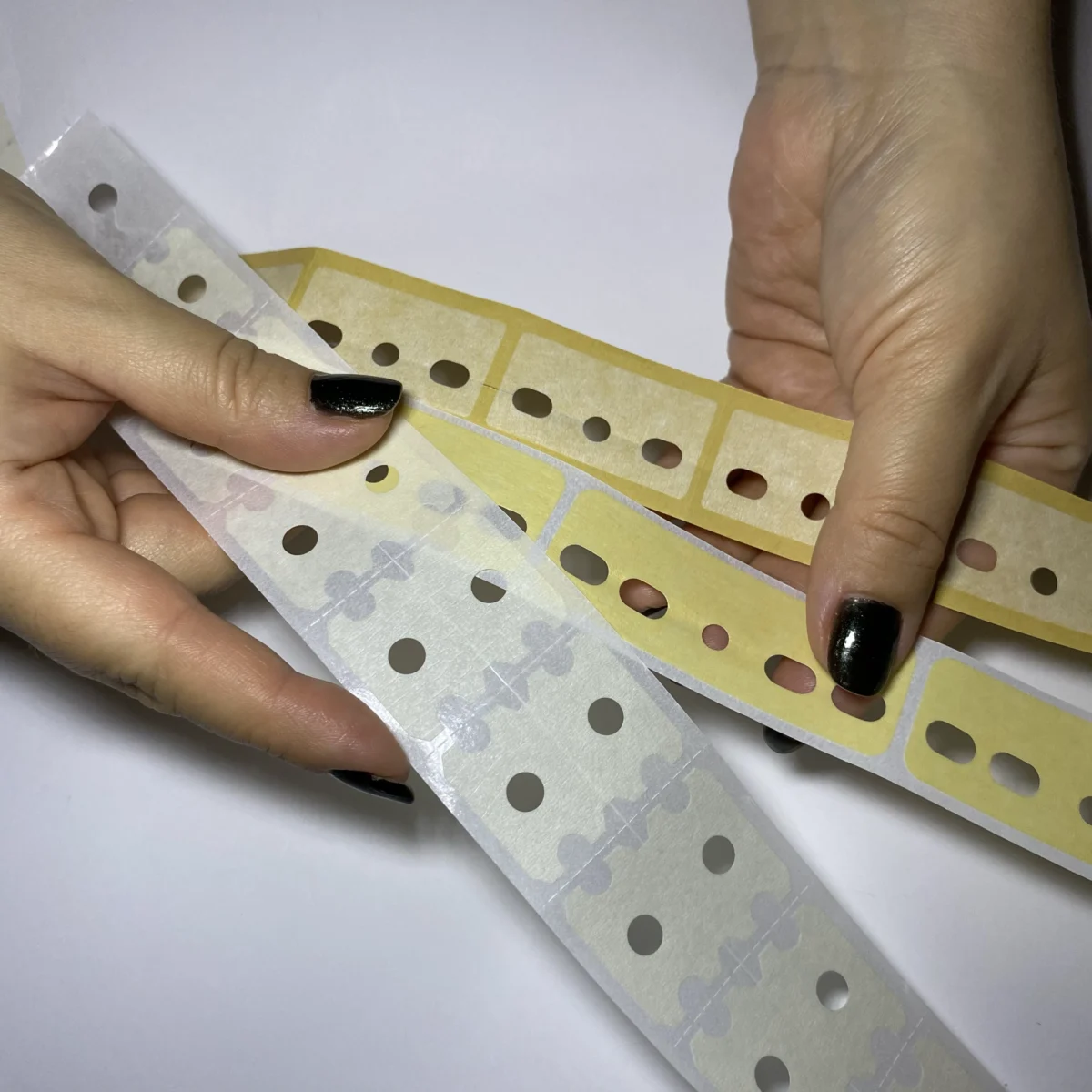
Paper splice tape SMT materials are more susceptible to moisture absorption due to their fibrous structure. Changes in humidity can cause paper-based tapes to swell or soften, potentially altering tape thickness at the splice point. These variations can affect feeder sensor readings and indexing accuracy.
Polyester SMT splice tape resists moisture absorption, maintaining consistent thickness and rigidity across a wide range of environmental conditions. This stability supports reliable feeder operation in facilities where humidity control may vary.
Adhesive performance over time is a critical consideration for SMT tape material comparison. Paper splice tapes may experience adhesive migration or degradation as the backing material ages, particularly when exposed to heat or prolonged storage. These changes can reduce bond strength or introduce residue along the carrier tape path.
Polyester-backed splice tapes provide a stable surface for adhesive systems, helping maintain consistent bond strength over time. This stability supports predictable splice behavior during both short-term production and extended storage before use.
 Modern SMT feeders rely on optical and mechanical sensors to detect tape movement, splice thickness, and pocket position. Variations in tape opacity or thickness can interfere with sensor performance. Paper splice tape SMT products may introduce inconsistencies due to fiber density variations or surface irregularities.
Polyester SMT splice tape offers uniform opacity and thickness, improving compatibility with feeder sensors. Consistent sensor detection helps reduce false stops and supports uninterrupted tape advancement through the feeder.
Long-term feeder performance depends on consistent tape behavior across thousands of indexing cycles. Paper-based splice tapes may degrade more quickly under repeated mechanical stress, increasing the likelihood of splice-related feeder issues over time.
Polyester SMT splice tape maintains mechanical integrity and adhesive performance across extended production runs. This consistency supports stable feeder operation and reduces the need for intervention during high-volume or long-duration assembly processes.
Relevant products include Polyester SMT Splicing Tape and Double Splice Tape, commonly used in modern SMT assembly environments.