One-Sentence Definition
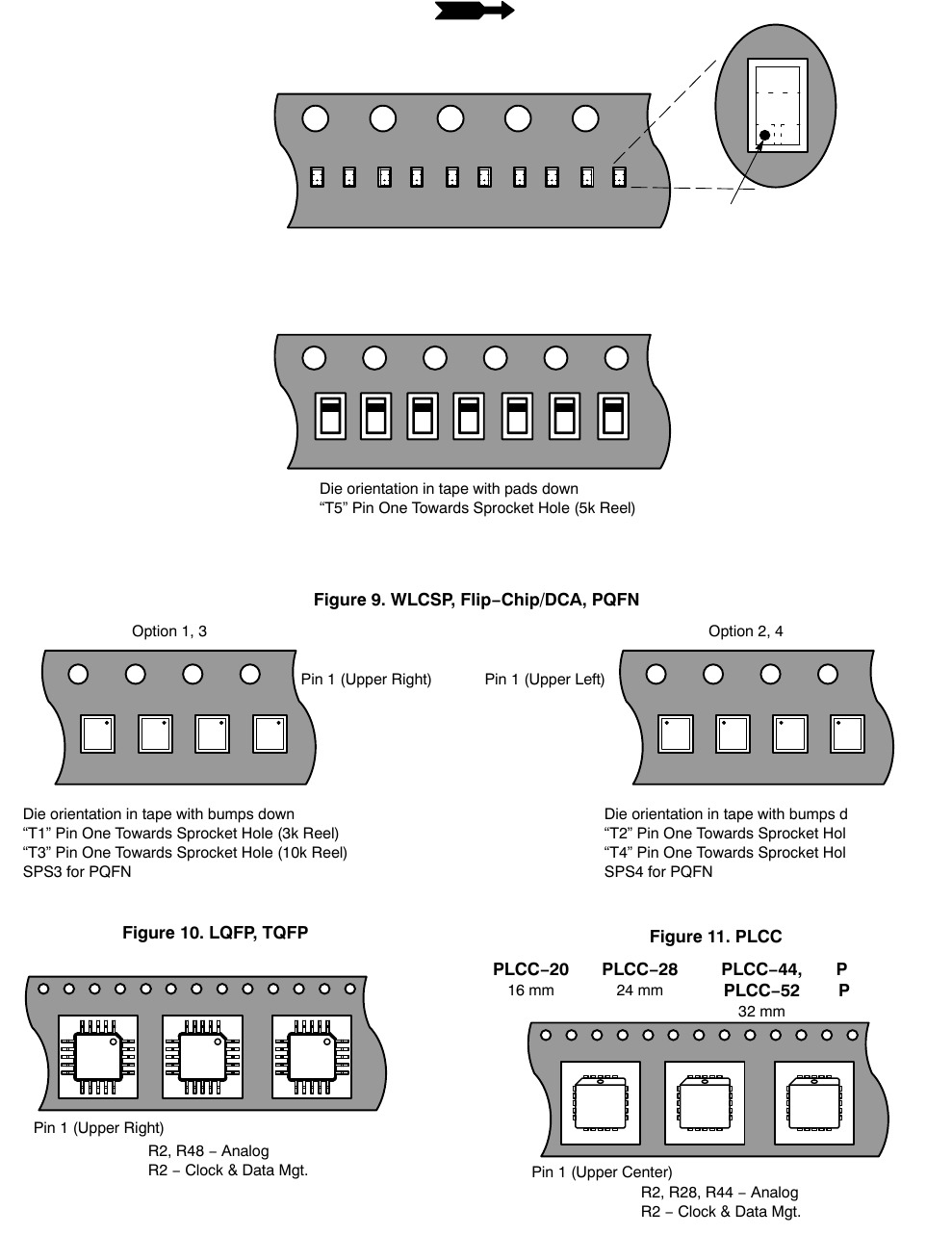
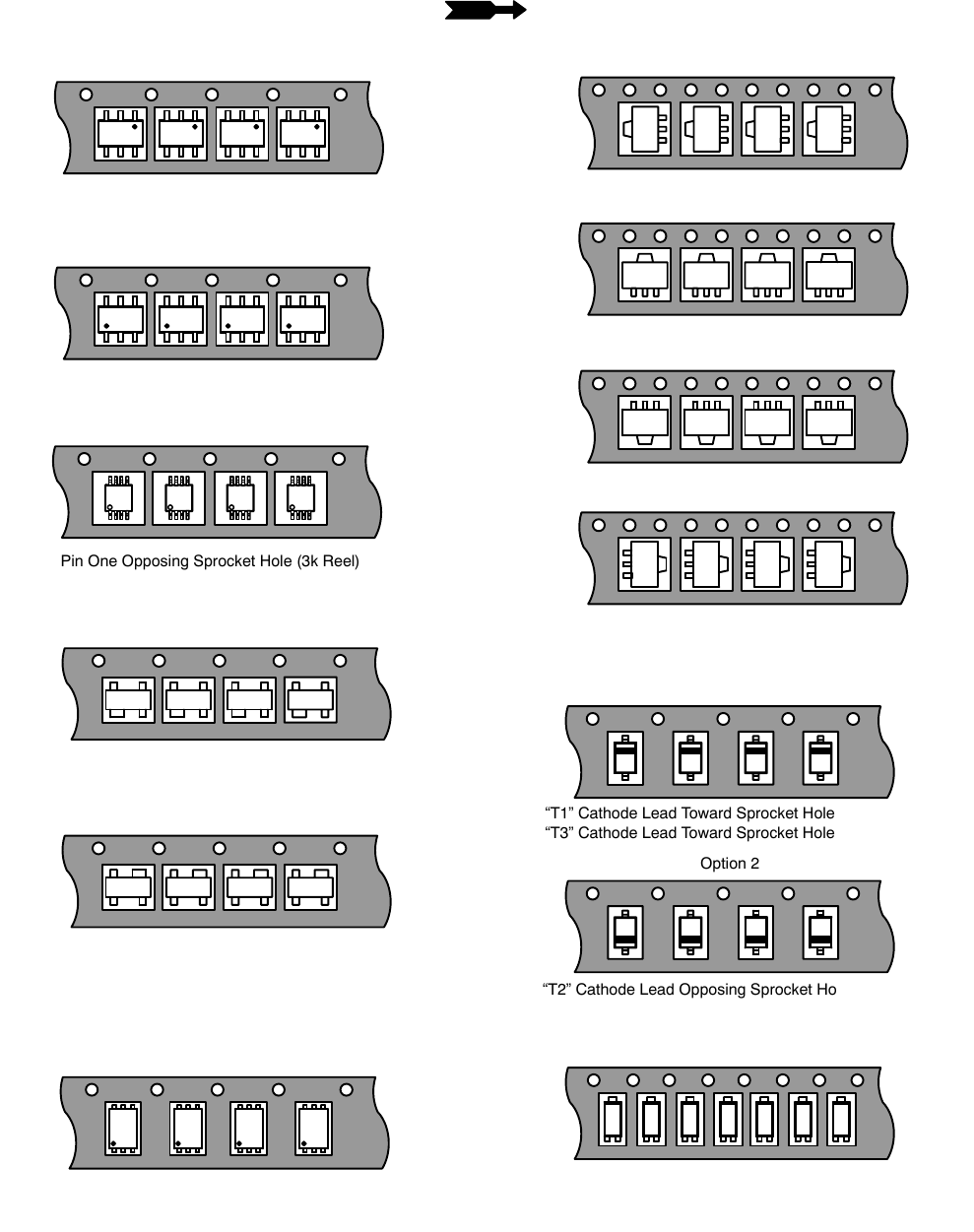
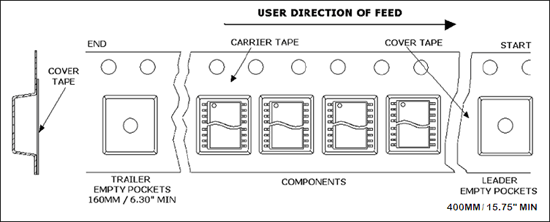
Standardized feed direction in SMT carrier tape is the uniform orientation of component pockets, cover tape, and sprocket holes that ensures consistent feeder indexing and repeatable component pickup across all pick-and-place equipment, as formalized by the EIA-481 standard.
Historical Context
In the early development of surface-mount assembly, SMT equipment manufacturers independently defined how carrier tape advanced through feeders. Companies such as Fuji, Panasonic, Universal Instruments, Sanyo, Samsung, Hitachi, and Juki designed feeders with opposing sprocket drive locations and tape feed directions.
As a result:
- Identical components could arrive wound in incompatible orientations
- Assemblers were forced to re-reel tape or maintain machine-specific inventories
- Setup time, feeder errors, and mispicks increased significantly
As SMT lines scaled in speed and feeder counts, these inconsistencies became a systemic inefficiency. The electronics manufacturing industry responded by defining a single, standardized feed orientation so that carrier tape would present components the same way regardless of machine brand or feeder design.
This effort culminated in the EIA-481 series, which established a common reference frame for:
- Pocket position
- Sprocket hole placement
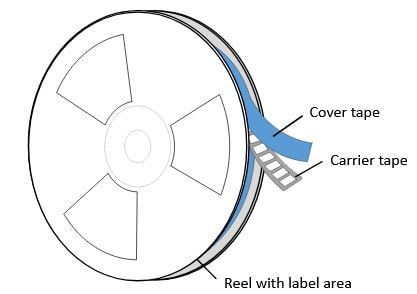
- Cover tape location
- Direction of tape advancement into the feeder
Mechanical Constraints That Required Standardization
SMT feeders rely on mechanical indexing, not visual correction, to advance carrier tape. Several physical constraints make consistent orientation mandatory:
Sprocket Hole Indexing
- Feeders advance tape using sprocket pins engaged at a fixed 4.00 mm pitch.
- Any reversal or mirroring of the tape changes the relationship between sprocket holes and pockets.
Pocket-to-Pick Alignment
- Pick nozzles assume a fixed pocket centerline relative to feeder datum.
- Reversed tape causes lateral and rotational offsets that cannot be corrected at speed.
Cover Tape Peel Geometry
- Cover tape must peel from a defined side to avoid lifting components.
- Incorrect feed direction changes peel angle and increases component escape.
High-Speed Placement Amplification
- At modern placement rates, even sub-millimeter inconsistencies compound into mispicks and feeder faults.
Because feeders operate open-loop, mechanical consistency is the only way to guarantee reliability.
Failure Modes Without a Standardized Feed Direction
When carrier tape feed direction is not standardized, several predictable failures occur:
- Mispicks due to nozzle misalignment over mirrored pockets
- Indexing errors from sprocket hole misregistration
- Cover tape delamination caused by reverse peel forces
- Feeder cutter wear from improper tape stiffness at splice joints
- Increased downtime from manual intervention and rethreading
These failures become more severe during:
- Reel-to-reel handoffs
- Active splicing during production
- High-speed or high-acceleration placement cycles
Standardization eliminates these variables at the source.
Standards References
The EIA-481 family of specifications defines carrier tape orientation and feed direction to ensure universal compatibility across SMT equipment and feeders.
Key elements addressed include:
- Reference edge definition
- Sprocket hole placement relative to pockets
- Pocket orientation relative to tape travel
- Cover tape location and peel direction
- Dimensional tolerances critical to feeder indexing
By enforcing a single directional convention, EIA-481 enables:
- Interchangeable reels across machine platforms
- Predictable feeder behavior
- Scalable, multi-vendor SMT lines