Tape handling is the unsung hero of small-batch SMT assembly. Even a single poorly spliced carrier tape can create a cascade of errors—misaligned ICs, mispicks, line stoppages, and wasted components. This article explains why TapeSplice and proper leader/trailer practices are critical for every prototype and low-volume assembly workflow.
The Leader & Trailer Secret Every Engineer Needs
Every carrier tape should include:
- Leader: Ensures smooth entry into the feeder
- Trailer: Prevents fishtailing and maintains vacuum pickup reliability
Leader/Trailer Benefits
| Component |
Purpose |
Effect on Line |
Keywords |
| Leader |
Guides tape into feeder |
Prevents misalignment |
feeder-ready ICs |
| Trailer |
Stabilizes tape tail |
Reduces mispicks & line stoppages |
tape tail stability |
“Did you know? Without a trailer, the last ICs in a 10-piece batch can misplace 20–30% of the time.”
Step-By-Step SMT Splicing Workflow
- Select Proper Tape
- Ensure tape rigidity and tear resistance are production-grade
- Cut and Prep Tape
- Use clean cuts, avoid bent pockets
- Splice Using TapeSplice Technique
- Align pockets precisely
- Apply consistent adhesive or splicing method
- Attach Leader and Trailer
- Confirm ICs are properly seated
- Feed Into Pick-and-Place Machine
- Verify smooth entry and consistent pickup height
Common Tape Handling Errors & How to Avoid Them
Table: Frequency of Tape Errors and Fixes
| Error | Frequency (%) | Recommended Fix | Keywords |
|---|
| Fishtailing | 30% | Attach trailer | tape tail stability |
| Misfeeds | 25% | Correct splicing | feeder-ready ICs |
| Tape tearing | 15% | Proper handling | SMT splice workflow |
| IC tilt | 10% | Adjust feeder pickup | small-quantity assembly |
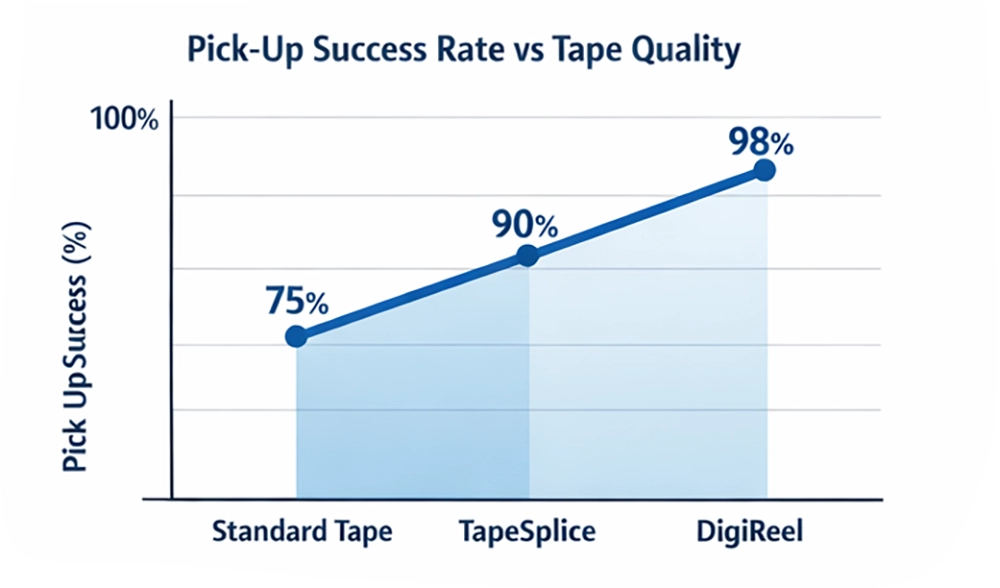
Bar Chart Concept:
Compare pick-up success rates: Standard Tape vs TapeSplice vs DigiReel
X-axis: Tape type, Y-axis: Success rate %
Real-World Case Study: Prototype Lab Saves 15 ICs in 1 Hour
Scenario: A low-volume lab was experiencing repeated misfeeds during a 15 IC build. By switching to TapeSplice splicing with leader/trailer, the lab:
- Reduced mispicks by 87%
- Cut manual rework time from 45 minutes → 10 minutes
- Maintained 100% feeder-ready IC accuracy
Tape Material Considerations
- Rigidity: Higher rigidity improves pickup stability
- Tear resistance: Reduces tape breaks during splicing
- Coefficient of friction: Lower friction ensures smooth feeder entry
Tape Material Properties Comparison
| Property |
Standard Tape |
TapeSplice |
DigiReel |
Impact |
| Rigidity |
Medium |
High |
High |
Pickup stability |
| Tear resistance |
Medium |
High |
High |
Reduced misfeeds |
| Friction |
High |
Low |
Low |
Feeder smoothness |
Top 5 SMT Splicing Mistakes Engineers Make
- Skipping trailer on small batches
- Poorly aligned splice points
- Using non-production-grade tape
- Feeding ICs too fast into pick-and-place machine
- Ignoring tape tail tension
“Stop Wasting Components! Fixing These 5 Mistakes Could Save Your Prototype Lab Thousands.”
Conclusion & Key Takeaways
- Proper tape handling and splicing is critical for small-batch SMT assembly
- TapeSplice + leader/trailer ensures feeder-ready ICs, reduced mispicks, and predictable builds
- Engineers and prototype labs save time, components, and rework