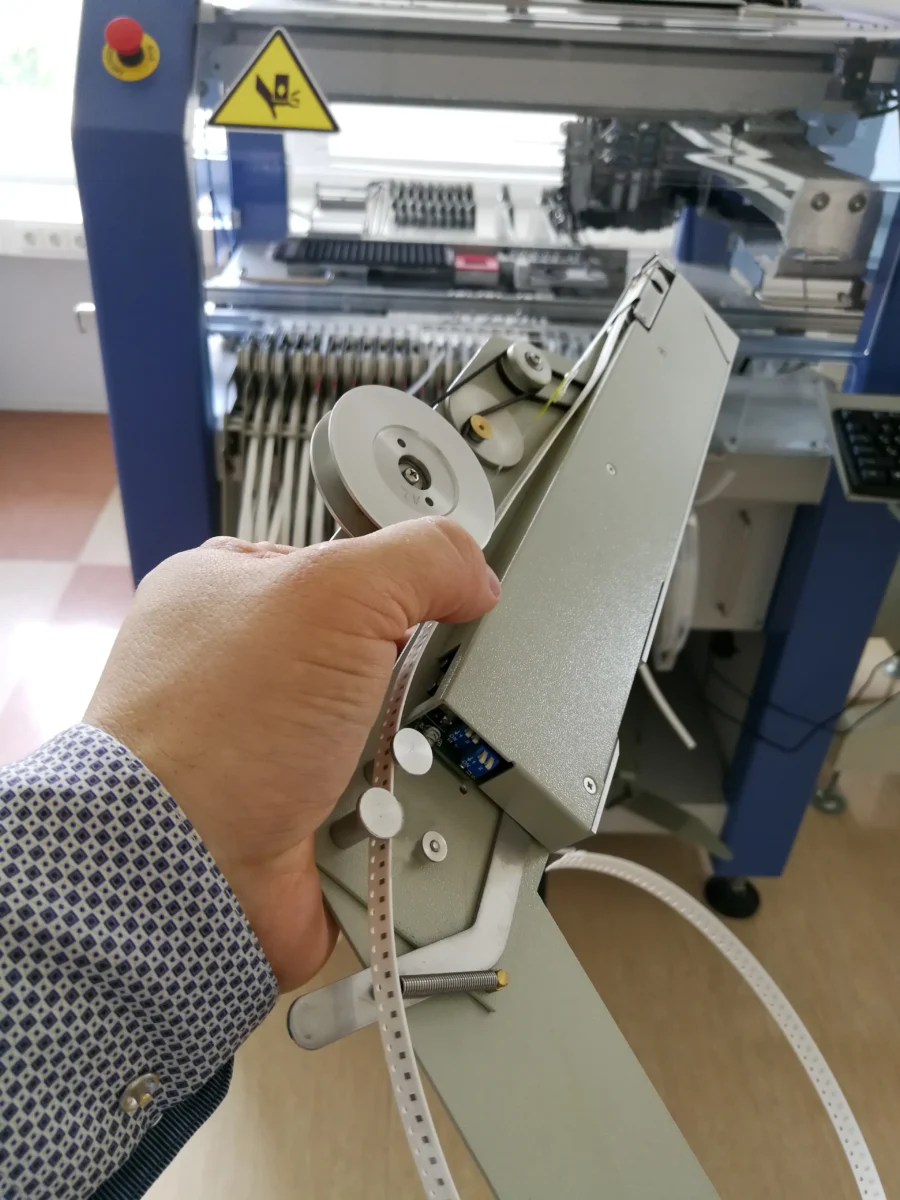
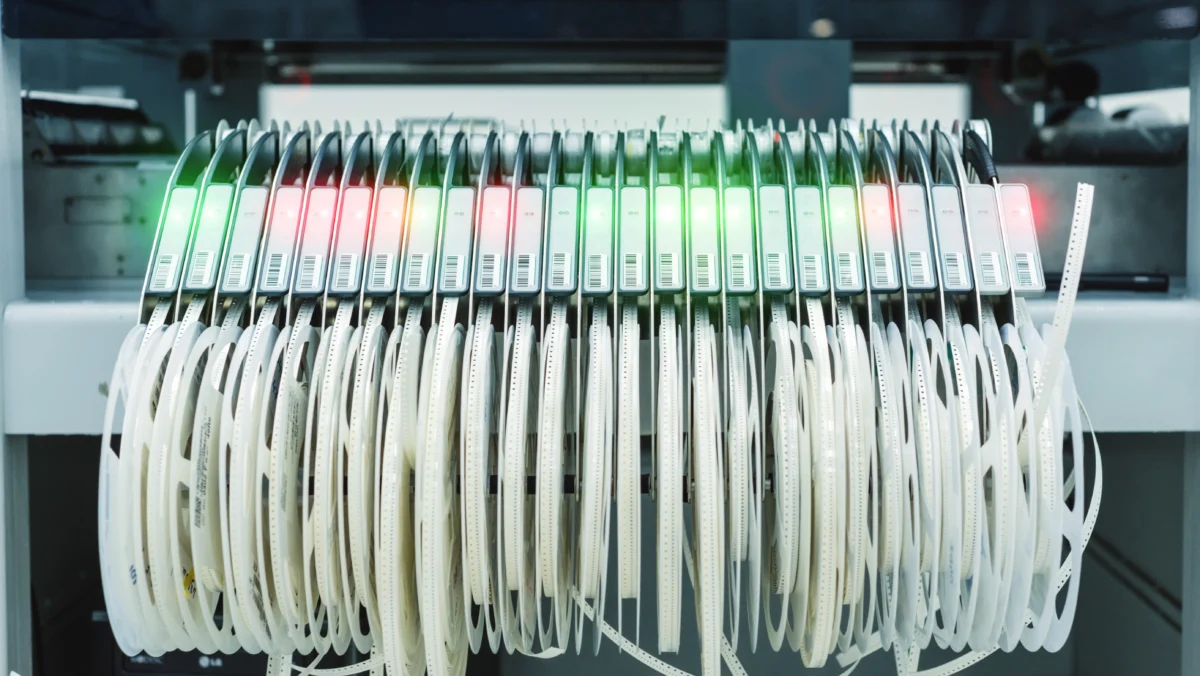
SMT feeder errors are often diagnosed at the feeder or placement head, but in many cases the root cause originates earlier in the process at the tape splice. SMT tape splicing introduces a mechanical and optical discontinuity into an otherwise uniform carrier tape system. When this discontinuity is poorly controlled, it can trigger feeder mis-picks, indexing faults, and intermittent pick-and-place feeder issues that are difficult to reproduce.
How Feeders Index Tape and Detect Pitch
Modern SMT feeders advance carrier tape using a combination of mechanical indexing and sensor-based verification. The feeder relies on consistent pocket pitch, uniform tape thickness, and predictable hole spacing to maintain alignment between the component pocket and the pick location.
Any deviation in pitch or thickness can cause cumulative positioning errors. While feeders are designed to tolerate minor variation, the splice location represents the single largest discontinuity the feeder encounters during normal operation.
What Happens Mechanically at a Bad Splice
A poorly executed SMT tape splice can introduce uneven overlap, excessive adhesive buildup, or misalignment between the outgoing and incoming carrier tapes. Mechanically, this creates a localized stiffness change that alters how the tape responds to feeder tension and indexing forces.
As the splice passes through the feeder, the drive sprocket may momentarily slip or over-advance, resulting in pocket misalignment. This mechanical disturbance often occurs only once per reel, making the error difficult to trace without focused inspection of the splice.
Sensor Interference Caused by Splice Thickness
Many feeders use optical or mechanical sensors to confirm tape advancement and detect splice transitions. Excess splice thickness or inconsistent opacity can interfere with sensor readings, leading to false positives or delayed indexing signals.
Paper-based or uneven splice tape can reflect or absorb light differently than the base carrier tape. This inconsistency may cause the feeder to misinterpret tape position, resulting in skipped pockets or double advances that lead directly to feeder mis-picks.
Real-World Feeder Error Scenarios Caused by Misaligned Splices
In production environments, splice-related SMT feeder errors commonly present as isolated faults rather than continuous failures. Examples include single-component mis-picks immediately after a reel change, feeders stopping without an obvious mechanical fault, or intermittent placement offsets that self-correct after several cycles.
Because these issues occur only at the splice point, they are frequently misattributed to feeder wear, nozzle problems, or component packaging defects rather than SMT tape splice problems.
How Precision Splice Tools Stabilize Indexing
Precision SMT tape splicer tools are designed to control alignment, overlap length, and adhesive placement. By mechanically constraining the splice geometry, these tools reduce variability at the splice point and allow the carrier tape to maintain consistent interaction with the feeder drive system.
Why Splice Repeatability Matters More Than Operator Skill
While operator experience can reduce obvious splicing errors, repeatability is a more critical factor in preventing SMT feeder errors. Even skilled operators can introduce small variations in overlap, alignment, or pressure when splicing manually.
Repeatable splicing methods ensure that every splice presents the same mechanical profile to the feeder. This consistency minimizes unpredictable feeder behavior and helps prevent intermittent pick and place feeder issues.
Common Splice Characteristics and Feeder Impact Comparison
| Splice Characteristic |
Poorly Controlled Splice |
Controlled Precision Splice |
| Tape alignment |
Offset or skewed pockets |
Pocket-to-pocket alignment maintained |
| Splice thickness |
Variable or excessive |
Uniform and predictable |
| Sensor interaction |
Inconsistent detection |
Stable sensor response |
| Feeder indexing |
Slippage or over-advance |
Smooth, continuous indexing |
| Error frequency |
Intermittent feeder faults |
Reduced splice-related errors |